
English| EUR
Suggested for you
More currencies
Choose a language
Mosquito Bay on Vieques Island holds the Guinness World Record for the brightest bioluminescent bay on the planet. Whether the trip justifies the logistics depends on lunar cycles, your tolerance for remote island access, and what you expect from the glow itself.
Quick answer
Yes, Vieques is worth visiting if you time it right. Mosquito Bay contains the highest concentration of bioluminescent dinoflagellates recorded anywhere—up to 720,000 per gallon during optimal conditions. The glow is brightest during new moon phases between December and April, when rain has been moderate and water temperatures favor plankton density. You cannot access the bay independently; licensed tour operators hold the only permits.
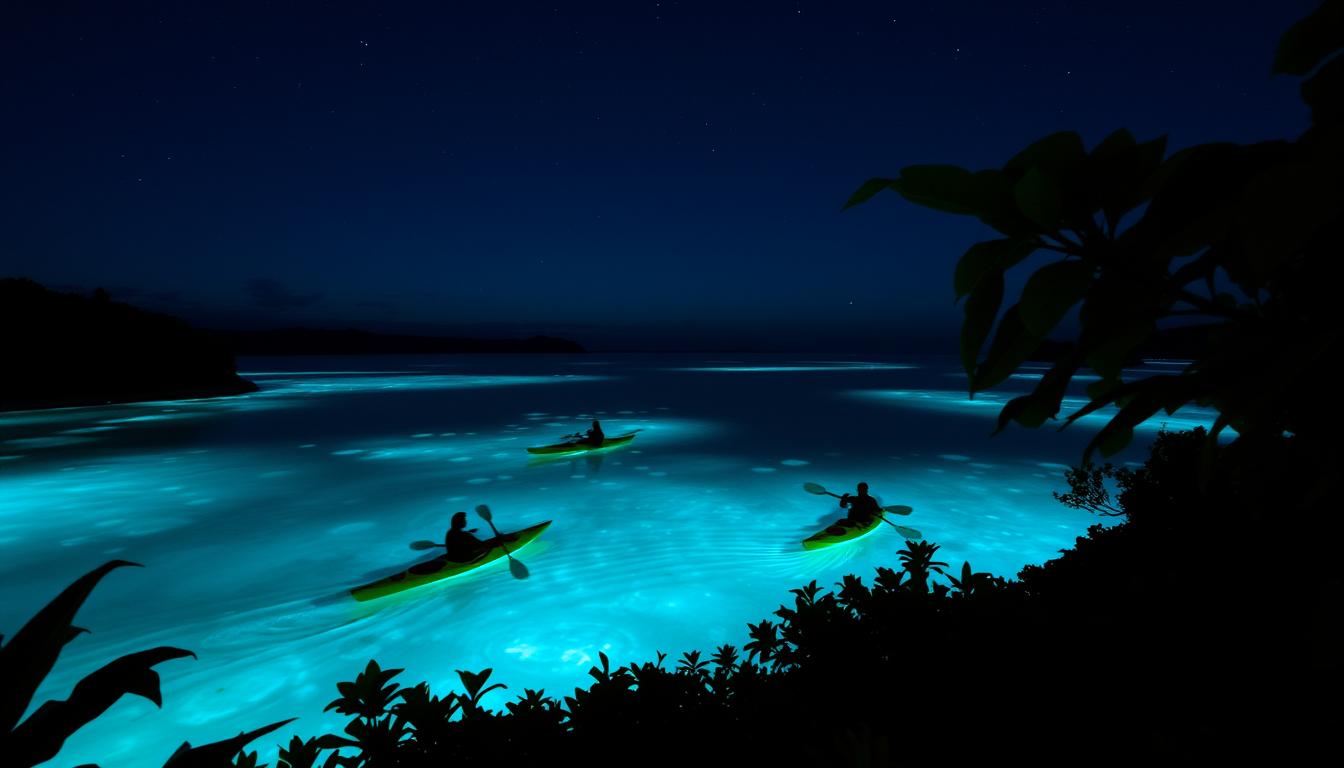
Mosquito Bay produces light through Pyrodinium bahamense, a single-celled organism that emits a blue-green flash when disturbed by movement. The bay's narrow mouth, mangrove-lined perimeter, and shallow depth create a sheltered ecosystem where these dinoflagellates concentrate at densities that outpace every other bioluminescent site in the Caribbean. On a moonless night with calm water, a kayak paddle leaves a trailing comet of light, and fish darting beneath the hull sketch neon streaks across the black surface. Whether Vieques justifies the detour hinges on alignment. The ferry from Ceiba runs twice daily and sells out weeks ahead during high season; the small charter flight adds cost but eliminates wait times. Once on the island, you must book through one of eight permitted operators—the bay itself sits within a wildlife refuge closed to independent access. Tour slots fill early for new moon windows, and cancellations for weather or rough seas are common. The experience lasts roughly two hours, with an hour of that spent paddling through the mangrove channel before reaching the open bay. The brightness varies by season and conditions. December through April offers the most reliable glow, when cooler water temperatures and consistent trade winds maintain plankton health. Summer months see occasional algae blooms and increased rainfall, both of which dilute visibility. A full moon or even a bright quarter moon will wash out the bioluminescence entirely—the contrast between organism and environment collapses under ambient light. Tour operators will paddle regardless, but the effect becomes negligible. Visitors who arrive during optimal windows report trailing light visible for three to four seconds per stroke, with enough intensity to illuminate faces and hands dipped in the water. Mosquito Bay remains one of fewer than ten reliably accessible bioluminescent bays worldwide, and the only one with year-round commercial access and protected status. The question is not whether the phenomenon itself delivers—it does—but whether your travel dates, moon phase, and willingness to navigate island logistics align with the narrow set of conditions that make the glow worth the journey.
“On a moonless night with calm water, a kayak paddle leaves a trailing comet of light, and fish darting beneath the hull sketch neon streaks across the black surface.”
The visibility of the bioluminescence in Mosquito Bay depends heavily on the lunar cycle, with the best arrival window being 19:00–20:00. Darkest night conditions during a new moon provide the optimal contrast for the microorganisms to appear.
Ideal dark skies
Darkness levels are highest during the new moon, providing peak visibility.
Warm, minimal rainfall
Conditions are consistent, though higher visitor volume may impact tour availability.
Mild temperatures
These months offer a balance of favorable weather and manageable visitor numbers.
—
Mid-week visits generally offer a quieter experience compared to weekends.
Verdict: Plan your visit during a new moon phase between April and October, arriving between 19:00–20:00 on a weekday for optimal darkness and fewer crowds.
Mosquito Bay remains open for visitors throughout the week to observe the bioluminescence. The following schedule reflects the standard nightly access hours.
Mosquito Bay is located on the southern coast of Vieques, Puerto Rico. Access is restricted to licensed commercial tour operators, making guided water-based transport the only method to reach the bay.
PR-201 to PR-995 toward the southern coast, then follow signage to the designated launch point
Local taxi services from the Vieques ferry terminal or airport
Because independent access is prohibited, you must arrange travel with a licensed operator who will manage the logistics of reaching the bay. Plan to be at your tour operator's designated meeting point well in advance of your departure to ensure timely arrival.
Night kayaking in a bioluminescent bay requires advance preparation and specific gear to ensure a safe and worthwhile experience.
Everything you need to know about is vieques worth visiting
Travelers frequently ask is Vieques worth visiting primarily for the world-renowned bioluminescence found in this protected water. The experience offers a unique encounter with glowing dinoflagellates that react to movement in the dark.
The best arrival window is between 19:00 and 20:00 to ensure you are on the water during the darkest conditions. New moon phases provide the highest contrast for viewing the natural light display.
Access to the bay is free, with an entrance fee of 0 USD. However, independent entry is not permitted as access is restricted to licensed commercial tour operators.
You must book a guided excursion because the area is a protected nature reserve. Access is restricted to licensed commercial tour operators to preserve the delicate ecosystem.
Many parents find that for families, is Vieques worth visiting because the bay provides an educational look at marine ecosystems. The gentle kayaking environment is suitable for those seeking a quiet connection with nature.
When planning your trip, consider that is Vieques worth visiting depends on your interest in rare environmental phenomena. Visitors should arrange transport to the island well in advance to ensure availability for evening tours.
The glowing waters of the Mosquito Bay lagoon are a rare spectacle often cited by visitors. This natural feature remains the primary reason travelers seek out this destination.